Topworks provides custom PEEK injection molding in China for OEM manufacturers requiring high-temperature resistance, mechanical strength, chemical resistance, and dimensional stability. Our services cover part design review, injection mold manufacturing, trial molding, and production.
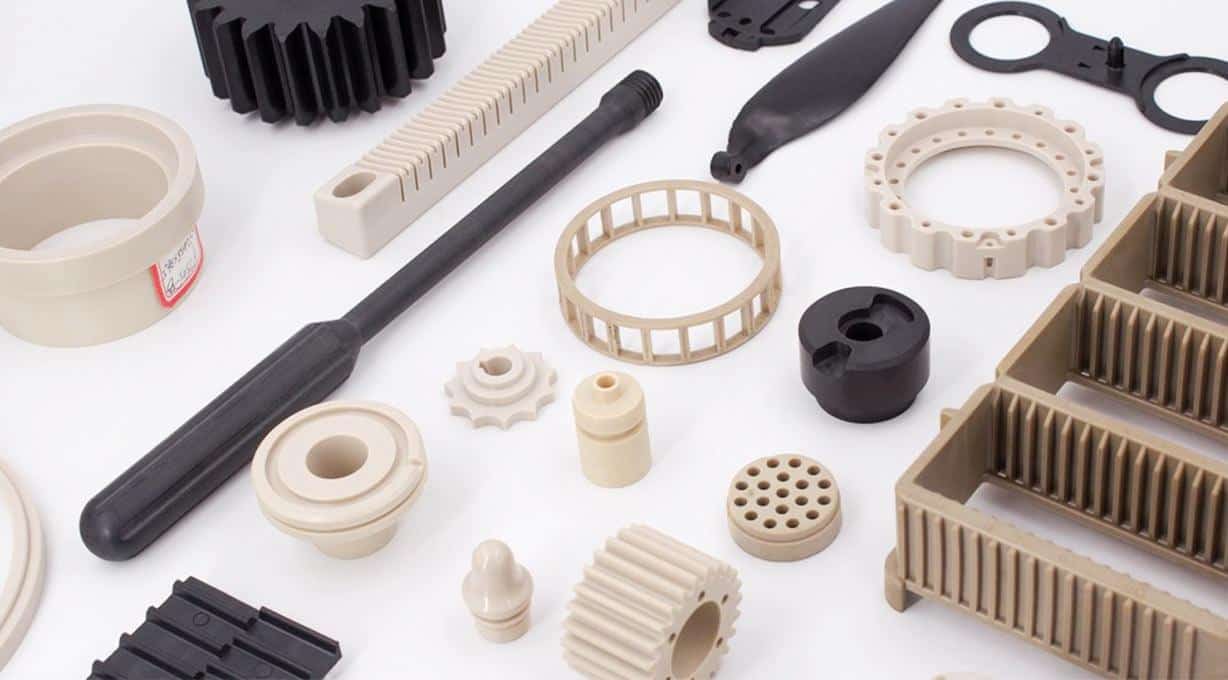
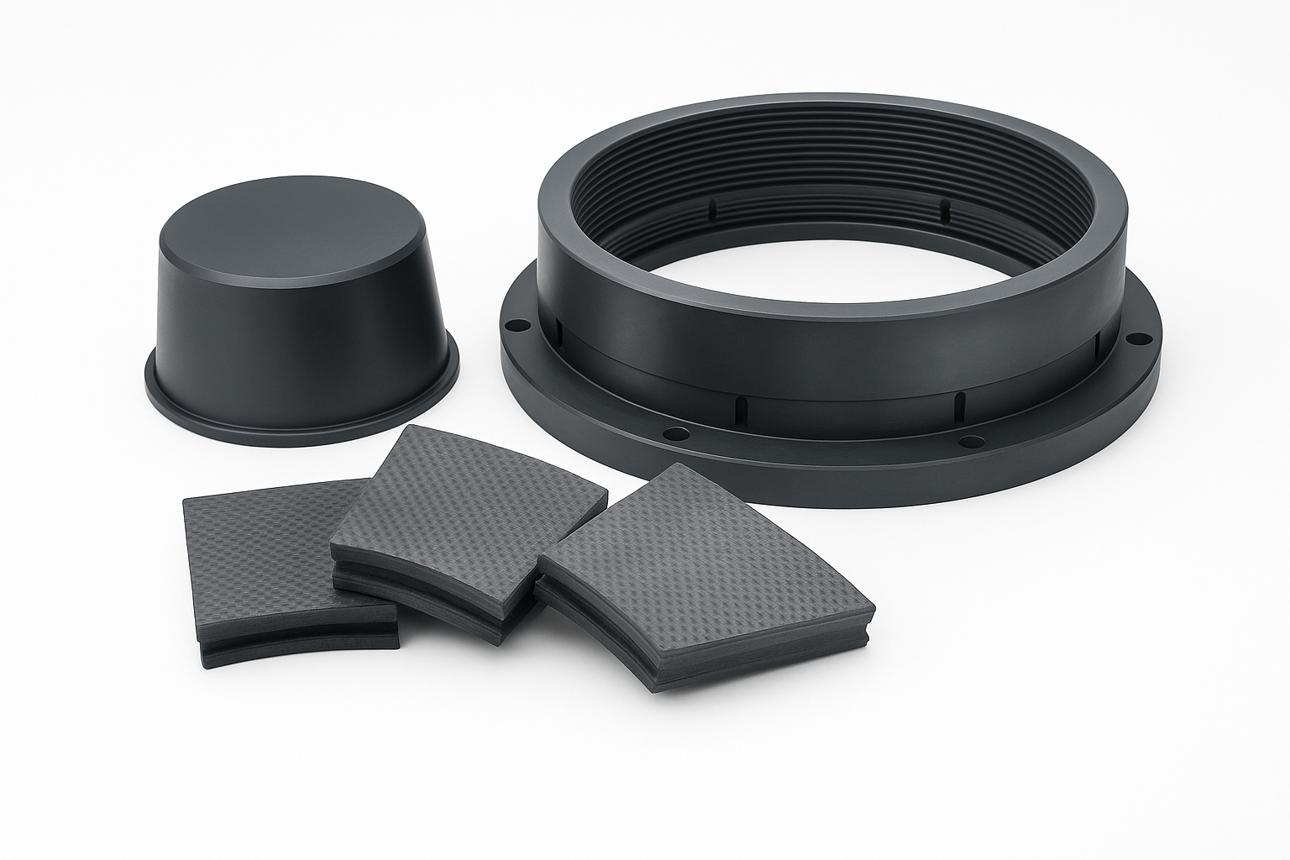
We review unfilled, glass-filled, and carbon-filled PEEK applications according to operating temperature, mechanical loads, dimensional tolerances, and annual production volume.
Request a PEEK injection molding quote
PEEK Injection Molding at a Glance
PEEK (polyetheretherketone) is a semi-crystalline engineering thermoplastic used in components exposed to demanding thermal, mechanical, and chemical environments. Injection molding makes it possible to manufacture complex PEEK components without extensive secondary machining.
| Engineering Parameter | Reference Specification |
|---|---|
| Material | Polyetheretherketone (PEEK) |
| Melting Point | Approximately 343°C |
| Melt Processing Temperature | Approximately 360–400°C for many injection molding grades |
| Mold Temperature | Typically 160–210°C, depending on grade |
| Material Drying | 120–150°C, according to resin supplier instructions |
| Material Options | Unfilled PEEK, PEEK GF30, PEEK CF30 |
| Mold Steel Options | H13 / 1.2344 and other suitable hardened tool steels |
| Production Options | Prototype tooling, low-volume molding, production tooling |
Processing temperatures are reference values, not universal machine settings. Final parameters depend on resin grade, part geometry, mold design, and material supplier recommendations.
Select Your PEEK Grade Before Pricing
PEEK injection molding costs depend heavily on the selected material grade. Unfilled PEEK and reinforced PEEK require different shrinkage allowances, gate designs, and wear-control measures.
| Material Grade | Typical Applications | Tooling Considerations |
|---|---|---|
| Unfilled PEEK | Seals, insulating components, valve parts | Crystallinity, shrinkage and surface control |
| PEEK GF30 | Structural components, electrical housings | Glass fiber abrasion and directional shrinkage |
| PEEK CF30 | High-stiffness components and mechanical parts | Fiber orientation and hardened tooling surfaces |
| Wear-Resistant PEEK | Bearings, bushings and sliding components | Compound-specific shrinkage and surface finish |
| Medical-Grade PEEK | Selected medical device components | Material traceability and application-specific qualification |
Material substitution should be approved before mold manufacturing. Changing from unfilled PEEK to carbon-filled PEEK after steel cutting can affect critical dimensions and require tooling modifications.
Applications of Custom PEEK Injection Molding
PEEK is generally selected when conventional engineering plastics cannot meet the required service temperature, chemical exposure, mechanical loading, or wear performance.
- Automotive: high-temperature connectors, transmission components, valve parts and wear-resistant components.
- Electrical and electronics: insulating components, connector bodies and semiconductor equipment parts.
- Industrial equipment: pump components, bushings, seals, gears and chemical-resistant fittings.
- Aerospace: lightweight structural components, brackets and selected cable management parts.
- Medical equipment: instrument components and selected reusable device parts, subject to material and process qualification.
What Changes PEEK Injection Molding Scope and Price?
High-temperature mold construction: PEEK requires considerably higher processing temperatures than ABS or PP. Heater capacity, thermal insulation, mold expansion and temperature uniformity must be considered during mold design.
Material consumption: PEEK resin is expensive. Runner weight, startup scrap, rejected parts and material remaining in the injection barrel can significantly affect production cost.
Reinforced material grades: Glass and carbon fibers increase wear on gates, runners, screws and cavity surfaces. Hardened steel and replaceable gate inserts may reduce long-term maintenance costs.
Part tolerances: Crystallinity, fiber orientation and uneven cooling influence dimensional accuracy. Critical dimensions should be identified before mold design rather than corrected after sampling.
Production volume: A single-cavity mold may be economical for initial production. Multi-cavity tooling requires additional evaluation of filling balance, shot size and material residence time.
Insert molding: Metal inserts require attention to insert positioning, thermal expansion, mechanical retention and the risk of stress concentration around the insert.
PEEK Injection Molding Defects and Engineering Controls
| Potential Defect | Common Cause | Engineering Control |
|---|---|---|
| Warpage | Uneven crystallization or fiber orientation | Balanced mold temperature, gate optimization and grade-specific shrinkage |
| Short Shot | Premature solidification or excessive flow resistance | Review melt temperature, gate size and flow length |
| Black Specks | Material contamination or thermal degradation | Clean processing equipment and controlled residence time |
| Weak Weld Lines | Insufficient bonding between melt fronts | Gate relocation, venting and filling optimization |
| Dimensional Variation | Unstable mold temperature or crystallinity | Controlled thermal conditions and dimensional inspection |
| Excessive Tool Wear | Abrasive reinforced compounds | Hardened tooling and replaceable wear components |
PEEK vs PPS vs PEI: Which Material Should You Choose?
PEEK is not automatically the best material for every high-temperature application. The correct choice depends on operating conditions, chemical exposure, wear requirements and total production cost.
| Property | PEEK | PPS | PEI |
|---|---|---|---|
| Polymer Structure | Semi-crystalline | Semi-crystalline | Amorphous |
| Glass Transition Temperature | Approximately 143°C | Approximately 85–90°C | Approximately 217°C |
| Chemical Resistance | Excellent | Excellent | Chemical-dependent |
| Wear Resistance | Excellent with suitable grades | Grade-dependent | Grade-dependent |
| Relative Material Cost | Very high | Generally lower than PEEK | High |
| Typical Selection | Demanding mechanical and chemical environments | Electrical and automotive components | Heat-resistant structural and insulating parts |
Consider PPS when chemical resistance and dimensional stability are required at a lower material cost. Consider PEEK when wear performance, mechanical strength and demanding operating conditions justify the additional investment.
Custom PEEK Injection Molding Services in China
Topworks is a China-based mold manufacturer located in Huangyan, Taizhou. Our engineering approach combines design for manufacturability (DFM), tooling design, mold manufacturing and injection molding support.
For PEEK projects, the quotation must include more than mold price. Material utilization, thermal control, equipment compatibility and inspection requirements directly affect the cost of each acceptable part.
We review these requirements before committing to tooling and production conditions:
- Material grade and approved resin supplier.
- Part geometry, wall thickness and critical dimensions.
- Required melt temperature and mold heating capacity.
- Injection unit compatibility and available shot volume.
- Gate design, runner consumption and material utilization.
- Tool life, production volume and inspection requirements.
What a Confirmed PEEK Injection Molding Quotation Covers
A preliminary quotation can be prepared from basic drawings and material information. A firm quotation requires an agreed part design, resin grade and production scope.
- DFM review and identification of high-risk features.
- Core and cavity steel specification.
- Mold heating and temperature-control requirements.
- Gate, runner and ejection system design.
- Material consumption and estimated molding cycle.
- T1 trial samples and agreed dimensional inspection.
- Tooling cost, part price and delivery schedule.
- Packaging and export arrangements.
Frequently Asked Questions About PEEK Injection Molding
Can PEEK be injection molded?
Yes. PEEK can be injection molded using equipment capable of maintaining its required melt and mold temperatures. Machine heating capacity, material handling and thermal control must be verified before production.
What temperature is required for PEEK injection molding?
Many PEEK grades are processed at melt temperatures of approximately 360–400°C and mold temperatures of 160–210°C. Some grades require temperatures outside these ranges. Always follow the selected resin manufacturer's processing guidance.
Why is PEEK injection molding expensive?
PEEK has a high resin cost and requires elevated processing temperatures. Material waste, mold heating, hardened tooling and extended cycle times can increase production costs.
Is injection molding cheaper than CNC machining PEEK?
Injection molding can reduce unit cost at sufficient production volume, particularly for complex parts. CNC machining may be more economical for prototypes or small quantities because it avoids dedicated mold investment.
Can glass-filled and carbon-filled PEEK use the same mold?
Sometimes, but different grades have different shrinkage, flow and fiber orientation characteristics. Critical dimensions and tooling wear must be evaluated before changing materials.
How much does a PEEK injection mold cost in China?
Pricing depends on part geometry, cavity count, steel specification, heating requirements, tolerances and expected tool life. A reliable quotation requires the part drawing, material grade and production volume.
Can you quote PEEK parts without a 3D CAD file?
An initial budget estimate may be possible from a dimensioned drawing or physical sample. A final quotation requires sufficient geometry and material information to verify tooling and processing requirements.
Is PEEK suitable for medical and aerospace applications?
Selected PEEK grades are used in medical and aerospace applications. Suitability depends on the exact grade, component design, operating environment and required regulatory or customer qualification.
Technical References
For material-specific processing parameters, consult the VICTREX PEEK technical datasheet and PEEK injection molding processing guidance.
Request a PEEK Injection Molding Quote in China
Send us your project requirements for an initial engineering and tooling review:
- 3D CAD file in STEP or IGES format, or a dimensioned drawing.
- PEEK material grade and reinforcement percentage.
- Expected operating temperature and chemical exposure.
- Critical dimensions and tolerance requirements.
- Initial order quantity and estimated annual demand.
- Testing, traceability and documentation requirements.
Submit your project details through our contact page to request a custom PEEK injection molding quotation.